Powering Viksit Bharat: Upgrade Your Manufacturing Technology Today to Capture India's 2-Billion Battery Future
Discover the real differences between Lead-Acid and Lithium (LFP) batteries for Energy Storage Systems (BESS) in India. Learn which technology to upgrade for short and long-duration storage.
 Arvind Mohan

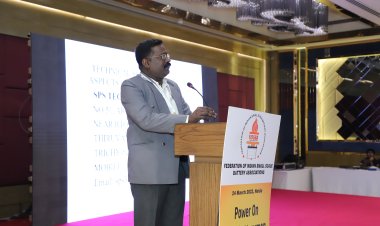
As India transitions toward a solar-powered future, mastering Battery Energy Storage Systems (BESS) is essential. Drawing from Dr. Nanjan Sugumaran’s groundbreaking presentation at the Poweron Conference – The Green Grid Summit (August 8, 2026, Udaipur), this article explores the distinct advantages and real-world challenges of Lead-Acid and Lithium Iron Phosphate (LFP) batteries, inspiring you to make informed technological upgrades.
The Dawn of India's Solar Era
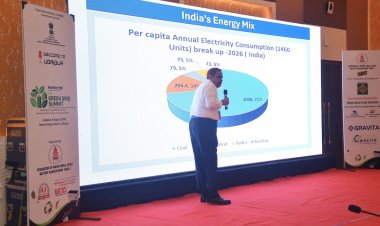
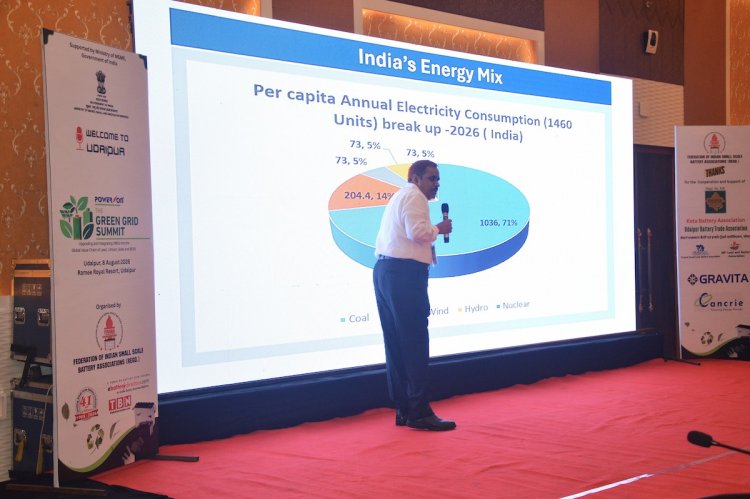
India's journey toward a "Viksit Bharat" requires massive energy infrastructure upgrades, particularly because energy generation must seamlessly align with our evolving storage capabilities. To achieve a high Human Development Index, India must dramatically increase its per capita electricity consumption from 1,460 to a target of 4,000 units, with solar energy driving this essential growth. Currently, peak solar generation is entirely absorbed during industrial hours, leaving no excess power stored in batteries. As a direct result, this monumental infrastructure overhaul demands an estimated 2.025 billion battery units by 2047 to successfully capture daytime solar power for continuous grid use.
Decoding the Systems: Short vs. Long Duration Storage
To effectively manage this massive influx of solar power, we must first categorize how this energy will be utilized across different applications by understanding the core functions of a Battery Energy Storage System (BESS). BESS fundamentally works by storing electrical energy as chemical energy and converting it back when needed, a process broadly classified into Short Duration Energy Storage (SDES) and Long Duration Energy Storage (LDES).
SDES is designed for high-intensity, rapid power delivery, typically discharging at 1C to 2C rates for up to an hour to handle multiple power surges throughout the day, stabilize the grid, and manage peak load shaving. Conversely, LDES is engineered for endurance, discharging power slowly at 0.05C to 0.1C rates over longer periods ranging from two to twenty hours to support applications like rural electrification and maximizing solar self-consumption in a single daily cycle. Understanding this fundamental distinction is critical, as it dictates exactly which battery chemistry is required to build a reliable and cost-effective energy network.
Short Duration Storage: The LFP Advantage
With this clear distinction in mind, we can now evaluate which technology is best equipped to handle the rapid, daily power surges demanded by SDES. For these fast-paced applications, Lithium Iron Phosphate (LFP) technology is definitively superior due to its high energy density of 160 to 170 Wh/Kg and highly efficient discharge rates. A single 50Ah LFP cell can entirely replace a 100Ah Lead-Acid cell in these short-duration scenarios where cost and footprint are major factors. Despite this operational edge, theoretical advantages often meet harsh realities, as LFP cell production remains a "manufacturing nightmare". Lower-tier factories face unsustainable scrap rates of up to 40%, meaning India is still 5 to 10 years away from reliable, high-quality domestic LFP cell production.
Long Duration Storage:
The Proven Reign of Lead-AcidWhile lithium struggles with local manufacturing hurdles for quick bursts of power, a different champion emerges when power must be stored and discharged slowly over many hours for LDES. For these endurance-focused applications, traditional Tubular Gel Lead-Acid batteries hold a commanding lead, possessing unmatched temperature robustness and a proven 20-to-25-year track record globally. In stark contrast, field trials in extreme Indian conditions show that LFP deep-cycle batteries fail within 1 to 3 years unless they are equipped with active cooling systems, which unfortunately increases capital costs by 10%. Consequently, Lead-Acid will continue to dominate this sector, provided the industry heavily invests in research and development—such as utilizing nano-oxides and carbon nanotubes—to achieve a necessary, upgraded lifespan of 3,000 cycles.
Manufacturing Survival and Local Business Risks
This technological divide ultimately dictates the survival strategies of local businesses navigating modern supply chains to build these distinct storage systems. Lead-Acid thrives on mature technology with 100% local raw material availability and greater than 99% recyclability, offering a secure, domestic foundation. Conversely, the lithium market forces Indian MSMEs to rely heavily on imported, low-tier LFP cells from China. These imported cells suffer from severe quality inconsistencies, such as wide variations in internal resistance and Open Circuit Voltage (OCV) decay. Ultimately, these defects cause uneven heat generation that can slash a battery pack's life by 50%. This leaves local businesses with a stark choice: they must either invest in world-class internal quality control labs to screen defective imported cells or face catastrophic product failures in the field.
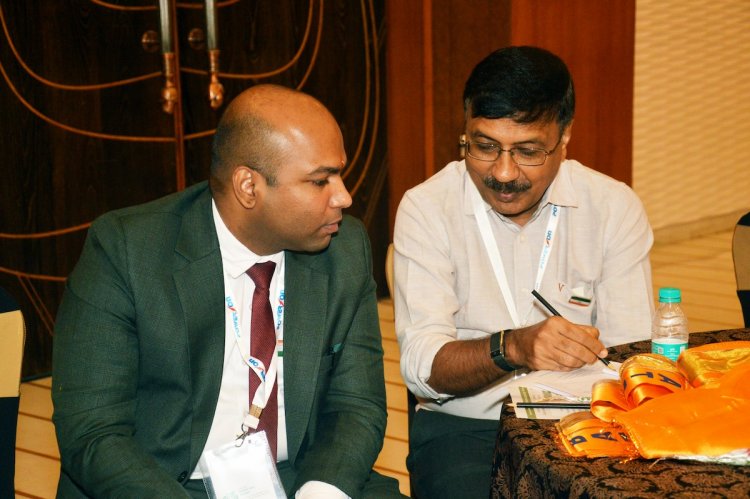
MSME leaders strategizing on how to navigate the complex realities of lithium importation and Lead-Acid upgrades.
Powering Viksit Bharat: Upgrade Your Manufacturing Technology Today to Capture India's 2-Billion Battery Future
The solar revolution is here, and it demands world-class quality. By investing in advanced research, in-house quality control labs, and next-generation technology upgrades now, SME batterymen can break free from import dependency and lead the charge in India's multi-billion dollar energy storage boom. Both Lead-Acid and Lithium will play indispensable roles in this future, but neither offers a shortcut to success. To remain competitive, traditional Lead-Acid manufacturers must actively embrace R&D to push the boundaries of Positive Active Material (PAM) stability and hit the 3,000-cycle benchmark. Simultaneously, businesses venturing into LFP must implement uncompromising internal quality control measures to protect their B2B partnerships from the pitfalls of low-grade imports. The future belongs to those who innovate—gear up, implement rigorous testing protocols, and claim your stake in the grid of tomorrow!